


 Centauri Carbon 2 Combo
 Centauri Carbon
 OrangeStorm Giga
 Neptune 4 Max
 Neptune 4 Plus
 Neptune 4 Pro
 Neptune 4
 Mars 5 Ultra
 Mars 5
 Mars 4 Ultra
 Mars 4
 Saturn 4 Ultra 16K
 Saturn 4 Ultra
 Saturn 4
 Saturn 3 Ultra
 Jupiter SE
 Mercury Plus V3.0
 Mercury XS Bundle
 Mercury X Bundle
 Mercury Plus V2.0
 Phecda Laser Engraver & Cutter
 Mini 250 g Filament Bundle
 PLA Filament 1.75mm Grey 10KG
 PLA Filament 1.75mm Black 10KG
 PLA Filament 1.75mm 4 Colors 10KG
 PLA Plus Filament 1.75mm Black 10KG
 PLA PLus Filament 1.75mm 4 Colors 10KG
 PLA Glow
 PETG Translucent
 PLA Wood
 PLA Marble
 PLA Metallic
 PLA Sparkle
 PLA
PLA PLA Basic
 PLA Plus
 Rapid PLA Plus
 PLA Pro
 PLA Filament 1.75mm Colored 2KG
 3 kg Filament Spool
 Rapid PLA Plus 5 kg Spool
 PLA Matte
 PLA Silk
 PLA Galaxy
 PLA-CF
 Rapid PETG
 PETG Pro
 PETG-CF
 PETG-GF
 TPU 95A
 PC
PC Rapid TPU 95A
 ASA
ASA ABS
ABS PAHT-CF
 Filament Vacuum Storage Bags Kit (20 Pcs)
 3D Paint Kit
 PEI Liquid Glue Pack (2 Pcs)
 Standard Resin V2.0 Grey 10KG
 ABS-like Resin V2.0 Grey 10KG
 Water-washable Resin Grey 10KG
 ABS-Like Ultra Resin
 Tough Resin
 ABS-Like Resin V3.0 Pro
 8K ABS-Like Resin V3.0
 Water-Washable ABS-Like Resin
 ABS-Like Resin V3.0+
 8K Standard Resin
 Rapid Standard Resin
 Standard Resin
 Standard Resin V2.0
 8K Water-Washable Resin
 Water-Washable Resin
 Water-Washable Resin V2.0
 ABS-Like Resin
 ABS-Like Resin V2.0
 ABS-Like Resin V3.0
 Plant-Based Resin
 Standard Plant-Based Resin
 Photopolymer Resin Detergent 5KG
 Marsmate Air Purifier
 Mini Air Purifier (2 Pcs)
 USB Air Purifier (2 Pcs)
 Activated Carbon Filter for Marsmate
 Mini Heater
 3D Stainless Steel Funnel
 Silicone Mat 2 Pcs
 For Centauri Carbon
 For Neptune 4 Series
 For Neptune 3 Series
 For Mars Series
 For Saturn Series
 For Jupiter Series
 LCD Screen
 Build Plate
 ACF/FEP/PFA
 Resin Tank
 Washing Bucket for Mercury Plus V3.0
 Washing Bucket for Mercury X/XS Bundle
 Washing Bucket for Mercury Plus V2.0
 Window Mirror for Phecda (6 Pcs)
 Enclosure for Phecda
 Risers for Phecda (8 Pcs)
 Rotary Attachment for Phecda
 Air Assist for Phecda
 Honeycomb Panel for Phecda
 Composite Filter for Phecda (5 Pcs)
 Laser Module for Phecda 20W





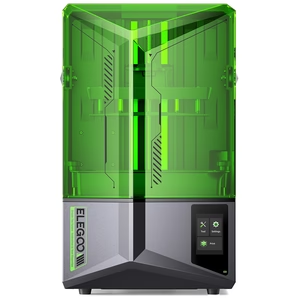

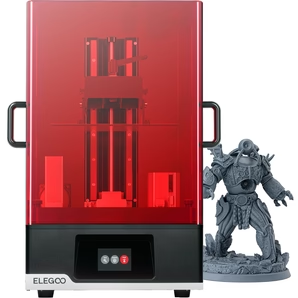


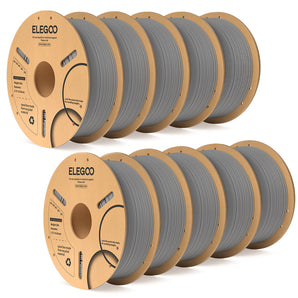


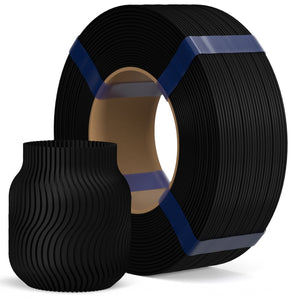











This season, KTH Formula Student (KTHFS) reached a major milestone: for the first time in nine years, their electric and autonomous race car successfully drove in an official Formula Student competition. Behind that achievement was a combination of engineering discipline, innovation—and a major shift in their manufacturing workflow made possible by ELEGOO 3D printers.
Transforming Manufacturing with ELEGOO 3D Printing
Before integrating ELEGOO machines into their process, the team relied heavily on CNC-machined MDF molds. This traditional approach required more than a full day of active labor, constant monitoring, complex toolpath preparation, and high material cost. In many cases, CNC bottlenecks also delayed other subsystems waiting for molds or test parts.
With ELEGOO printers added to their workflow, the process changed significantly.
According to the team, using ELEGOO printers for mold production has been a game changer, replacing the time-consuming CNC machining process with a far more streamlined PLA-based workflow that reduced turnaround time substantially.
How 3D Printing Elevated KTHFS’s Manufacturing Workflow
KTHFS used ELEGOO printers not only for standalone parts, but for critical components that directly influenced aerodynamics, safety, and rule compliance. These included:
Rear wing mounting bracket molds
Positive molds for front wing elements
Upright prototypes
Ribs for the upper side structure winglet
Cockpit screw protection caps (printed during competition)
Rapid prototypes for rule compliance validation

Formula Student has highly specific dimensional rules. By printing prototypes, the team reduced the risk of misinterpretation, improved accuracy, and avoided mistakes that could compromise eligibility. What used to be a slow, manual measurement process became far more precise and predictable.
Across these applications, 3D printing provided the same core advantages: faster iteration cycles, improved accuracy, reduced manufacturing delays, and greater flexibility in design decisions.
The ELEGOO printers’ reliability and ease of use also encouraged the team to shift significantly more tasks into additive manufacturing—something that was not feasible with their previous machines.
Race Day: When 3D Printing Saved the Competition
At Formula Student Germany, the team faced a last-minute issue: protruding screws in the cockpit required protective covers to pass mechanical scrutineering.
With traditional manufacturing, this could have taken hours—or made passing impossible.
With their ELEGOO printer, the team designed, printed, and installed the required covers in less than an hour, allowing them to pass scrutineering and compete on schedule. Their car drove autonomously for the first time in team history, becoming one of only 30 out of 84 teams to complete all manual dynamic events.
A Breakthrough Season Powered by Reliable Tools
This was a defining year for KTHFS: their car passed all mandatory checks, completed every dynamic event, and delivered the team’s first-ever autonomous drive in official competition. Just as meaningful was the fact that they finished manufacturing on schedule—something that had been a persistent struggle in previous seasons.
The reliability and speed of ELEGOO’s 3D printing solutions played an important role in this transformation. Faster mold production, smoother prototype development, and the ability to make immediate late-stage adjustments allowed the team to keep momentum through the most demanding phases of the project. Instead of spending long hours monitoring machining processes or waiting for external production windows, students could devote their time to engineering, simulation, testing, and validation—the work that truly determines performance on the track. The flexibility of additive manufacturing also meant that unexpected challenges, such as the last-minute cockpit screw issue during competition, became solvable within hours rather than days.
By accelerating fabrication, improving precision, and reducing operational risks, 3D printing supported the team’s push toward a more refined, competitive, and reliable vehicle. It wasn’t just a new tool added to the workshop—it fundamentally reshaped how the students brought their car from concept to competition.
KTHFS expressed deep appreciation for the support of partners who made this progress possible. They emphasized how having access to dependable, modern manufacturing tools enables students to apply their engineering knowledge in a fast-paced, real-world environment—an experience that is not only rewarding today but essential preparation for their professional futures. “This project could not exist without the support of our partners,” the team shared. “Thank you for being part of our journey.”
Looking Ahead: New Goals, New Materials, New Possibilities
Motivated by this year’s success, the team is already planning to elevate their manufacturing capabilities even further. They aim to expand into higher-temperature materials such as ABS, enabling them to print molds that can withstand the demands of pre-impregnated carbon fiber layups. This advancement would open the door to even more sophisticated aerodynamic elements with greater rigidity, heat tolerance, and design flexibility.
With additive manufacturing now firmly established as part of their workflow, future vehicles are expected to become lighter, more aerodynamic, and more innovative. The team hopes that these enhancements will bring them closer to competing at the very top tier of Formula Student.


